
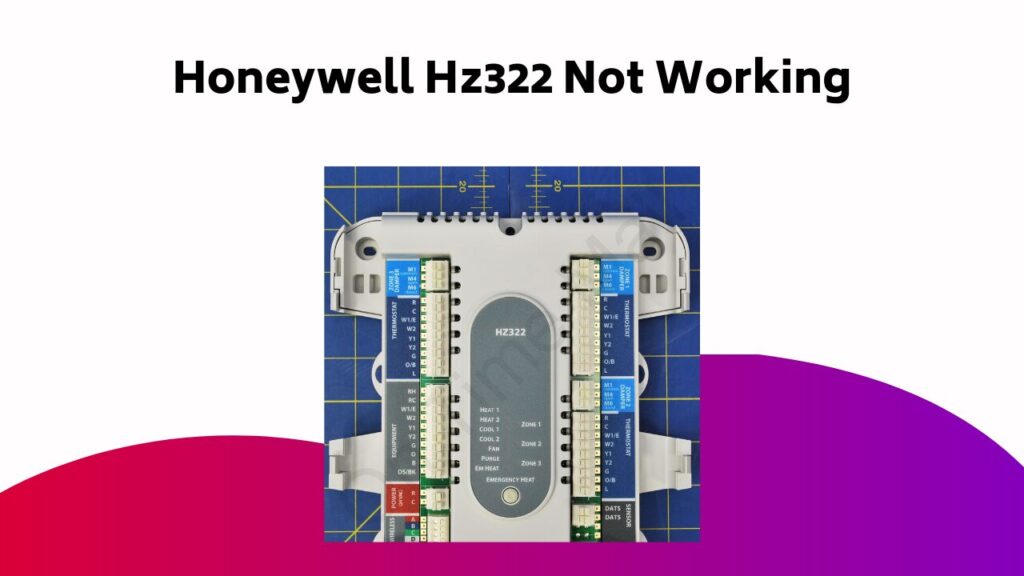
While your Honeywell Hz322 is designed to provide reliable temperature control, it’s not immune to issues. On the contrary, even the most advanced systems can malfunction. When troubleshooting your Hz322, it’s essential to look beyond the initial symptoms and identify the root cause of the problem. What’s causing the temperature drop or high limit switch to malfunction? Is it a faulty sensor or a wiring issue? You’re about to find out.
Contents
Key Takeaways
- Identify the root cause of the issue by investigating beyond initial symptoms, looking for key symptoms like temperature drops and high limit switch triggers.
- Cancel all calls on the thermostat and provide the Sonic board model number to technical support for guided diagnosis and solution.
- Remove and inspect sensors for damage, corrosion, or blockage, checking for frays or cuts in sensor wires and securing connections to the unit.
- Check panel lights and error codes or readings on the display to gather more information and diagnose the problem.
- Implement solutions by cleaning or replacing faulty sensors, reassembling the unit, and verifying all components are securely fastened and functioning properly.
Identifying the Root Cause of the Issue
When troubleshooting the Honeywell Hz322, identifying the root cause of the issue is essential to resolving the problem efficiently.
To trouble shoot, you’ll need to investigate beyond the initial symptoms. For instance, a high limit switch being open may indicate a triggered protection mechanism, but it’s pivotal to dig deeper.
Look for key symptoms such as a temperature drop of 3-10° below the high limit setting or a supply temperature around 60-60 something degrees while the house temperature is 69°. These data points will help you diagnose the issue, leading you to the root cause, such as a bad discharged air temperature sensor, and enabling you to resolve the problem efficiently.
Technical Support and Diagnosis
Technical support plays a crucial role in efficiently diagnosing the issue with your Honeywell Hz322. When you call for heat, technical support will guide you through a series of steps to identify the problem. They’ll ask you to cancel all calls on the thermostat and provide the model number of the Sonic board. Then, they’ll instruct you to return to the panel to check the lights and gather more information.
| Step | Action | Purpose |
|---|---|---|
| 1 | Cancel all calls | Aid in diagnosis |
| 2 | Provide Sonic board model | Understand system configuration |
| 3 | Check panel lights | Gather more information |
With this information, technical support can diagnose the issue, such as a high limit problem or a faulty discharged air temperature sensor, and provide a solution to get your heater working again.
Sensor Removal and Diagnosis
Now that you’ve gathered information with technical support, it’s time to take a closer look at your Honeywell Hz322’s sensors.
Remove the sensors real quick to inspect them for any signs of damage, corrosion, or blockage.
Check the sensor wires for frays or cuts, and guarantee they’re securely connected to the unit.
Look for any debris or dirt accumulated on the sensors, which might be causing faulty readings.
Take note of any error codes or readings on the display before removing the sensors, as this will help you identify the root cause of the issue.
Solution and Repair
With your sensors removed and inspected, you’ve likely identified the source of the problem.
Now it’s time to implement a solution. Make sure to clean or replace faulty sensors, and reassemble the unit according to the manufacturer’s instructions.
Check the wiring and connections for any signs of damage or corrosion, and repair or replace them as needed.
Once you’ve made the necessary repairs, reassemble the Hz322 and turn it back on. Verify all components are securely fastened and functioning properly.
Perform a test run to guarantee the unit is working correctly, and you’re good to go.
Lessons Learned From the Experience
Repairing your Honeywell Hz322 can be a valuable learning experience.
You’ve likely encountered issues you hadn’t considered before, and overcoming them has taught you important lessons.
One key takeaway is the importance of methodically troubleshooting the system, rather than jumping to inferences.
You’ve also learned to consult the user manual and online resources when needed.
Additionally, you’ve gained hands-on experience with circuit boards, wiring, and other components.
These lessons learned will help you tackle future issues with confidence and efficiency.
Remember to apply these skills to other appliances and devices, making you a more capable DIY troubleshooter.